
Eutrophic collapse in the Sarracenia purpurea Microecosystem
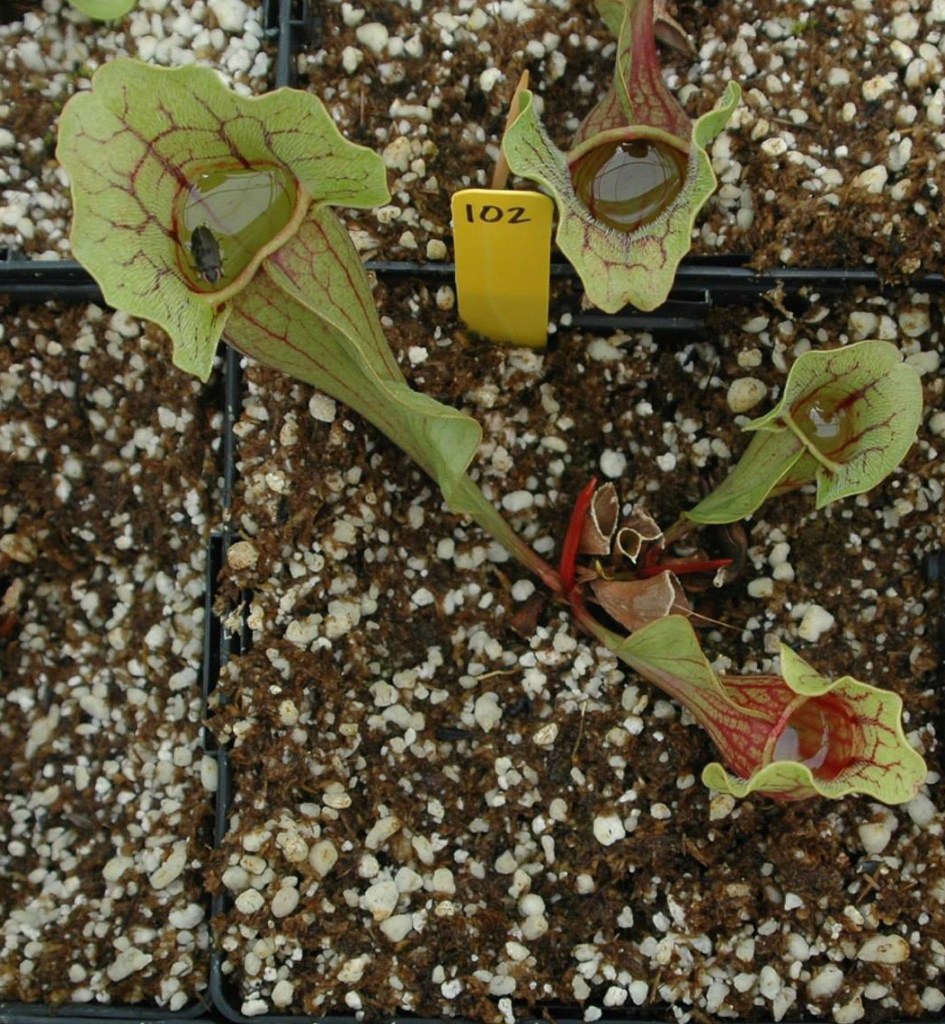
Sarracenia purpurea is a long-lived, perennial, carnivorous plant found in nutrient-poor bogs and fens across North America and Canada. The plant forms pitchers from modified leaves which fill with rain water and host a multi-trophic food web that includes bacteria, rotifers, protozoa, and insect larvae. This food web is responsible for breaking down, decomposing, and mineralizing the insect prey that falls into the pitchers. The mineralized nutrients and carbon dioxide released through decomposition of prey can be taken up and used by the plant.

The S. purpurea system experiences a rapid change if pitchers are enriched with organic matter at a high enough concentration and rate. The addition of organic matter causes an increase in oxygen demand by bacteria, resulting in a rapid crash in the concentration of dissolved oxygen inside the pitchers. In lakes and ponds, enrichment can cause a rapid decline in water clarity, resulting in the death of primary producers which fall to the bottom and are decomposed by bacteria, increasing oxygen demand and depleting dissolved oxygen. Though the brown food web in S. purpurea is detritus-based and the green food web in lakes and ponds is primary producer-based, both ecosystems experience increases in detrital load and subsequent decline in dissolved oxygen. In lakes and ponds, these state changes lead to changes in the food web, such as a loss of higher trophic levels.

I use a mix of controlled greenhouse and field experiments and proteomics to explore how ecosystems collapse and recover after detrital enrichment. I use the S. purpurea microecosystem to understand how such changes alter the composition of aquatic bacterial communities, and how these changes feed back to influence ecosystem recovery. Shifts between stable states in aquatic ecosystems can happen suddenly and can be difficult to reverse due to underlying positive feedbacks. My work focuses on characterizing responses of ecosystems to enrichment during ecosystem collapse and recovery so that we can identify barriers to recovery and better inform restoration efforts.
 Amanda Northrop